Module 1: What trading psychology means
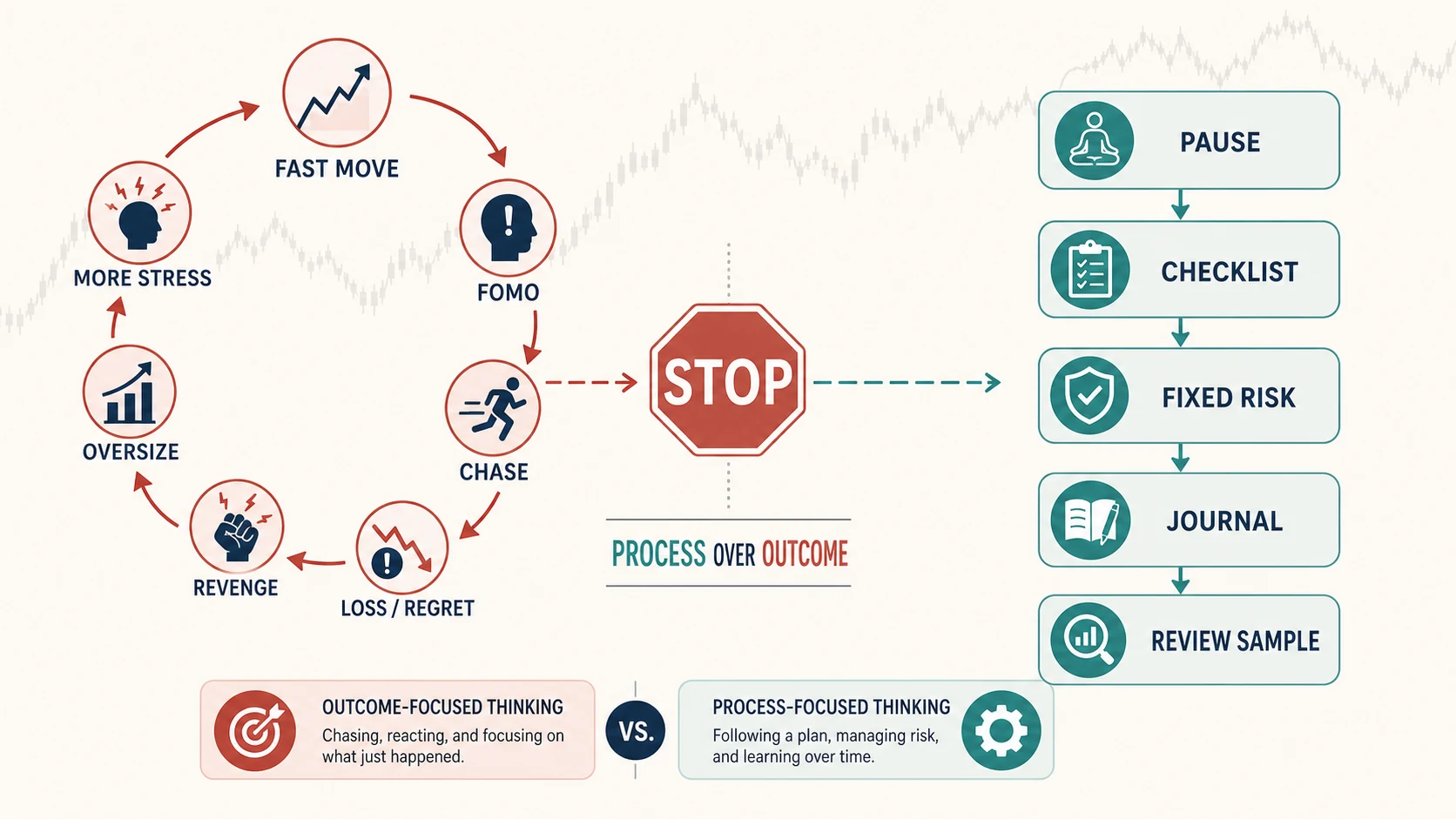
Trading psychology is the design of a decision process that remains usable while fear, urgency, greed, or disappointment is present. A sound decision can lose and a poor decision can win once, so process quality and financial outcome must be scored separately.
Module 2: The FOMO loop
FOMO often begins with a fast move, another person's profit, or perceived scarcity. Map trigger → automatic thought → physical response → action → outcome. Add friction by disabling one-click trading, writing entry/stop/target before opening the ticket, and labeling departed moves “missed—do not chase.”
Module 3: Revenge trading
Revenge trading tries to recover a loss immediately. Warning signs include larger size, easier definitions, instant re-entry, and moving the daily cap. Precommit a pause, a daily loss limit, cancellation of unplanned orders, and an incident log.
Module 4: Outcome bias
Score setup validity, context, pre-defined invalidation, risk compliance, and checklist completion before P/L. A 5/5 process with -1R can be good; a 1/5 process with +2R remains a lucky error.
Module 5: Loss aversion
Loss aversion can produce small average wins and large average losses. Define fixed, structural, partial, or trailing exits before entry. Never widen a stop merely to avoid realizing a loss.
Module 6: Overconfidence
A winning streak may reflect variance or a favorable regime. Scale only from sample size, rolling expectancy, drawdown, MAE/MFE, and rule adherence—not confidence.
Module 7: Recency bias
Freeze rules for a defined review window, version every change, and test new rules out of sample rather than rebuilding after a handful of trades.
Module 8: Confirmation bias
Write disconfirming evidence and invalidation before entry. A pre-mortem asks what would prove the thesis wrong and how the opposing case would be argued.
Module 9: Decision fatigue
Long screen time and excessive symbols degrade attention. Limit sessions and watchlists, use alerts, and score sleep, stress, and focus before taking risk.
Module 10: Before, during, and after
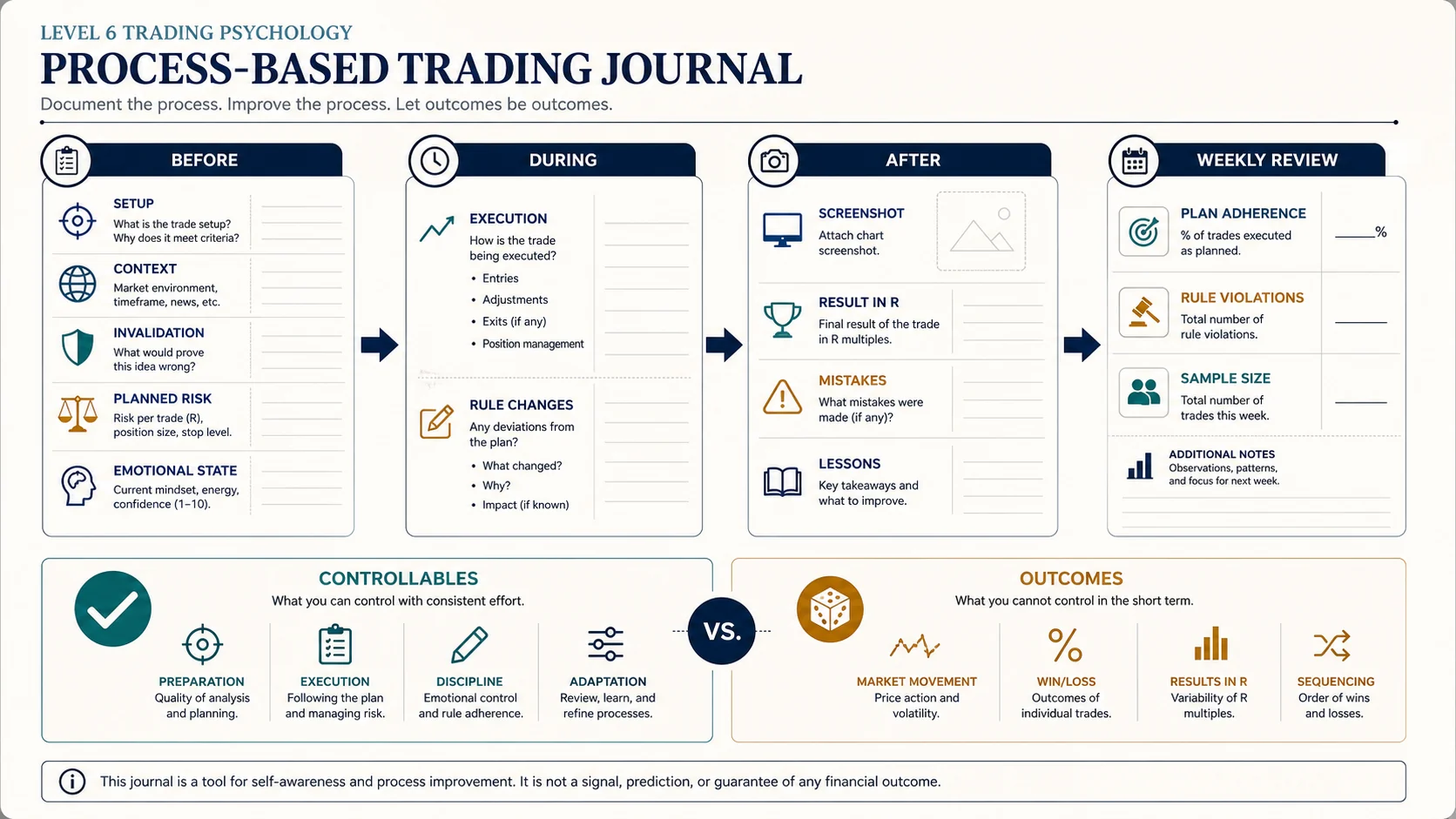
Check news, server time, spread, loss caps, and scenarios before the session. Execute prepared rules during it and record facts afterward.
Module 11: A behavioral journal
Record emotional triggers, urgency, process score, violations, and before/after screenshots. Review adherence and the cost of unplanned trades, not merely P/L.
Module 12: A 30-day practice plan
Week one identifies triggers, week two installs checklists and pauses, week three audits screenshots, and week four changes one measured behavior. Require high checklist completion, full journaling, and strict loss-limit compliance before moving from demo to live funds.
If trading harms sleep, finances, work, or relationships, or feels uncontrollable, stop live trading and seek appropriate professional support. This lesson is educational and is not mental-health diagnosis or treatment.
Lesson audience
Page views by visitors and members
- Total
- —
- Today
- —
- Total
- —
- Today
- —
Trading Forex and CFDs carries a high level of risk and may not be suitable for all investors. You could lose all of your invested capital. Please study carefully before investing. Content on this site is for education only and does not constitute investment advice.